

Whilst there are a variety of filler and sculpting products on the hobby market, Milliput is definitely one of the best-known and respected products available. The first version of this epoxy putty was developed in 1968 for car repair projects, before pivoting to the model and miniature sculpting market in 1970.

Produced now in several different colourways (all available here on lsghobby.com), this putty can match almost any project and be painted, sanded, sculpted, or drilled to suit your needs! It is also possible to colour Milliput with powder pigment during the mixing phase.The different versions of Milliput available are: Standard Yellow-Grey, Silver-Grey, Superfine White, Black, Terracotta, Turquoise Blue, and Metallic.
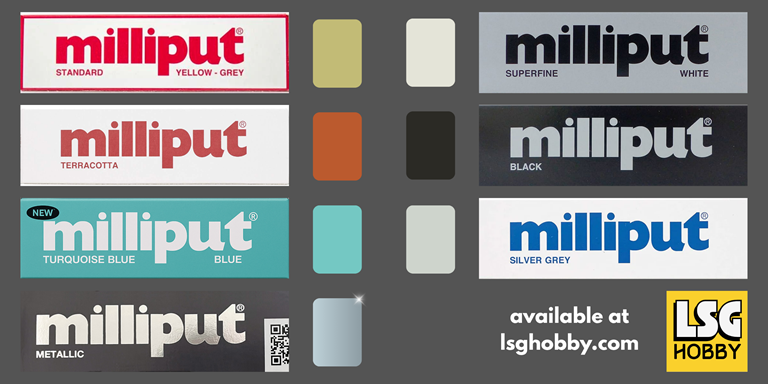
The strength of Milliput when cured is an advantage when working on delicate forms, as it will dry hard regardless of scale (provided that it has been mixed correctly). This also is an advantage when used as a filler or repair medium, as it ensures that the fix is permanent.
So how do you use it?
Great question! The putty comes in two parts, which are mixed together in equal quantities to form the workable putty. This is typically done by hand by kneading the two components together between your fingers (gloves recommended). Once fully mixed the putty can be applied to grease and dirt-free surfaces, or sculpted into the shape of your choice. Milliput is responsive to water until it has completely set, so the usage of damp tools/ fingers is recommended to avoid unnecessary sticking to surfaces.
How should it be stored?
Milliput typically has a storage life of two years when stored in a cool, dry place. Exposure to heat or significant humidity will reduce the shelf life of Milliput. Anecdotal evidence does suggest that the putty is usable after two years, but this has not been confirmed by the company itself so we are unable to speak to the validity of this claim.
What will you create? Tag us on instagram at @lsghobby !